Showing posts with label Blogging. Show all posts

Friday, 18 June 2010

Difference Between Successful Blogs And Your Blog

If you are a blogger looking to improve the results you are getting from your blog, this post is for yo.

I don't care if the desired action is to make a sale or get an opt in or get an adsense click, they are all measures of outcome from your blogging activity. They are your desired results.

While it is true that there are a lot of factors that could influence the outcome of your blog e.g. blogging platform, colour scheme, day of the week on which you post, even time of day that you post, all these things all add up to a small part of what determines blog success. Yes they are important but they are the fine print. The difference as measured in cents.

What we want to know is how to make a difference to the dollars. The big impact.

We are told that the motto of a blogger should be

"Write Post
Get Traffic"


And when you read all the blogging guides out there be it John Chow's or Yaro Starak's they all teach variations of the same thing. Post frequently, capture your leads and get traffic.

And you are probably doing this.

So why is it that some blogs generate hundreds to thousands of dollars per month for the blog owner while others do not. We are all "writing posts" and "getting traffic"

The difference is in the quality of your posts. It's not enough to post any old dross.

Your visitors must get something from your blog. An Ah-ah moment, some entertainment, a nugget of information they did not know before, a tip that helps them in their day to day lives, or business, something!

You must give them something with each and every post. It's why autoblogs just do not work when it comes to making a significant income online [I know, it's beginning to sound like I have something against autoblogs. Actually I do but that's for another day]

The amazing blogs that generate hundreds of dollars are written by...people. Shock horror. People like you and me who sit down and put quality content on their blogs.

And so can you!

If I have done nothing else, I do hope this post has stimulated you to try just a little harder with your blogs. It will make all the difference

Thursday, 17 June 2010

Google Alerts Source Of Blog Content

Anyone who has been in blogging for any period of time will have realized that content is crucial if your blog is going to make any big shakes in the search engines and with your visitors.

Problem though is if you are like me, you want your content to be meaningful and useful for your visitors. You want to give them all the information they need and keep out the dross.

But there are times when the creative juices run dry. You just do not have anything to share on your blog. At least not anything that is up to the quality that you would like to show in each and everyone of your blog posts.

And for me when that happens, I simply do not post. But there is a source of content I look to first. Actually there are several but for the purposes of this blog post we will focus on one

Google alerts.

Google alerts, most of you know as a way to discovering when Google indexes your articles or posts. [Seems like a waste of a great resource to me] But anyway that's a popular use of Google alerts

But what if you can use alerts to help you generate content. To give you ideas about what to post on your blog. To keep you up to pace with what everyone else in the industry is doing.

Just set up an alert for your keyword or industry term.

Go to http://www.google.com/alerts


This page will load


Enter the keyword in the appropriate box

If you are using a phrase then it makes sense to put it in quotation marks or your inbox will soon be flooded

Set up an email account that is just for receiving Google alerts. I say this because of your keyword is one that is used often online, your mailbox will soon be full of all these alerts

Another useful tip with Google alerts is if your keyword generates more than a few alerts a day, then set frequency to 'once a day' instead of 'as it happens'

Now you have all the information on the internet about your keyword sent directly to you in your email as it is indexed by Google.

Great source of ideas for content

Wednesday, 9 June 2010

Top Tips from Autoblogging

Autoblogging is the process of creating a blog that automatically populates itself with content. Other peoples' content. Personally I am not into autoblogging. Something whiffy about it. But as an affiliate marketer, I learned everything I could about autoblogging so that I know what the rest of the industry is doing.

And I learned a few things that applied in non-autoblogging have yielded good results.

The thing is the people in autoblogging realize one basic but important thing. Content is King. Lots of content and frequently updated. That's why autoblogs do so well.

But as an ethical marketer who is not into autoblogging, I thought I'd apply this one principle to one of my blogs

The principle is simple. Post content frequently. Obviously the burden on those of us that like to generate our own content is the burden of creating the content. But I gave it a go

So I started a blog in a competitive niche, no point in going for easy pickings. and started writing good quality content often. I admit, I could not keep up to the post every few hours or everyday that autoblogging permits but I posted to this blog a couple of times a week.

I sometimes only posted once a week.Just because I have other online projects that need my attention and then there is the day job as well. And also if you really do not have something useful to post, then I believe you shouldn't post at all

Anyway, a few months later and my blog is number one in Google for some pretty lucrative keywords.

Again I do not autoblog but by understanding one of the reasons why autoblogging works and applying that principle to my blog, result!

Saturday, 10 April 2010

Enable Blog Comments Or Disable Blog Comments

Blog comments and if you should enable or disable comments on your blog is one of those questions that triggers a lot of answers for both sides in the forums

Looking at blogs on the internet, it's interesting to see that the blogs that seem to have the most success all have comments enabled. They encourage you the reader to post comments on their blog

Yes we all know the major problem with enabling blog comments. Spam

Just too many people trying to get quick and easy backlinks to their sites by posting comments on every blog they come across. It would not be so bad if the comments had any relevance to what the post is discussing or if the user names were not so...spammy

And as bloggers we could implement comment moderation to keep the spam out

But if you are like me, you probably have a bunch of blogs in different niches and moderating them all could fast become a full time job.

So yes, it's understandable why some of you are reluctant to enable comments on your blogs

BUT

All my blogs have comments enabled. I'll give you a few reasons why I have comments on my blogs

  • Good source of content. Some comments do truly ad to the conversation and give some valuable information to your readers. Even if the comment does not agree with what the stance I am taking in the post, it gives another view on the subject. And there is the search engine value of the added content
  • Good source of ideas. I wrote a blog post recently and someone asked how does he achieve some other thing with his blog. Hmmm, hang on a minute, he just gave me an idea for my next blog post
  • Reader participation. I like visiting blogs that are interested in my point of view. Call me egoistic or whatever but I like to voice my opinion. I also tend to go back to blogs where the author has responded to my comment. If it works on me, I am certain it will work on other blog readers. it's about being made to feel like you are a valued part of the blogs audience.
So to answer the question 'should you enable comments on your blog?' I would say definitely yes

Monday, 8 March 2010

Autoblogging | Pros and Cons of Autoblogging

Autoblogging has become pretty famous or in some cases infamous lately. Before I launch in, I should perhaps explain what autoblogging is

Autoblogging is short for automatic blogging. Autoblogging involves generating content for your blog from other sources online. The sources could be RSS feeds from other blogs, ezinearticles, you tube, press releases etc. Anything that syndicates it's content via RSS

Anyone reading between the lines will understand why autoblogging has recently become more popular. Webmasters are waking up to the concept of on page optimization. For a while there we abandoned all and focused primarily on getting backlinks. Because we thought backlinks were the key to good search engine position. And they do have a big part to play.

But soon we realized that the amount of content you have on your pages has a lot to do with the ranking and search engine positioning of our pages. So now we are back to generating a ton of content for our pages.

Problem is generating genuine, unique content ain't easy and it can be time consuming. This little post on autoblogging, I am certain, will take me about 30 minutes to complete. Add on that the time taken to research and understand the topic.

So if I wanted to post 3 or 4 articles on this blog a day, that would take a lot of hours. Not time I have especially since I have a handful of websites and blogs

With autoblogging, you can use other peoples' content to populate your blog. This suddenly means the time limit on the number of posts you can generate is gone. So you can set your autoblog to post 3, 4 , 20 whatever number of articles you choose a day.

Problem with autoblogging is the content is not unique. It is duplicate content and therefore you have already given your blog a distinct disadvantage from the start. Having said that the share quantity of content may make up for this

Earlier I mentioned that autoblogging is infamous with some marketers and I'd better clarify that. Autoblogs are not popular with the search engines especially Google. If we keep in mind that Google's main aim is to deliver relevant results to keyword searches, it becomes immediately clear why autoblogs are not their favorite blogs

Also going through the forums, a few webmasters have reported an adsense ban which they feel is due to their use of the autoblogging technique.

Personally, I do not autoblog and have no intention of doing so in the near future. This and all my other web properties are focused on delivering unique and useful content to my visitors. As a result I am not an expert on autoblogs but I feel it is important to tell you, my blog visitors about autoblogging. It may be something you want to pursue

More information on autoblogging at autoblogs explained

Friday, 5 February 2010

Niche Bloggers Your Audience Is Human

Funny isn't that.

In niche marketing we are taught so many things. Lots of stuff about search engine optimization and getting your pages indexed. There is a lot out there about robot text files and CSS and php and all the jargon

Somewhere in the middle of all this, the primary objective of blogging for a living or niche marketing or online marketing or Adsense sites or whatever else it is you are into online is forgotten

And what is this primary objective

To get content in front of people that are interested in the content in a format that will encourage the people to read your content and take the desired action

Simple.

Nothing else, matters
The words on your pages must speak to a human audience

And as human beings we do not go to websites looking for something to click so that we have to bring out our wallets...No

We go to websites often to find information about a certain topic or product or gadget

Even for those of us that do our shopping online. You have decided what the product you want to buy is. You know how much you are willing to pay.
Most of us still pause and have a good read of the page before we click on the purchase button.

To cut to the chase...It's the words that sell

So it's great to have the savvy to tell the Google bots to go here and there. You may even be able to make the bots do a back flip for you

But the Google bots are not going to buy your product

Am I saying SEO is bad.... Certainly not. Most of the hundreds of pages I have distributed all over the net are search engine optimized

But more recently I have focused on the quality of content on some of my websites. And the changes here and there have made a lot of difference. Both to my rankings and to the revenue generated from these sites

We have all heard it over and over again 'content is king' but I think somewhere along the way we have become oh so distracted by the insatiable quest for backlinks

I think it's back to basics.

Generated and frequently update your quality content and the results you are getting from your sites will improve

Speak to your audience and they will respond to you

Till next time

Wednesday, 3 February 2010

Niche Marketing Blog Basic Guide

Another decade has begun and it's amazing how topical blogging for a living still is. Perhaps because for some people it works and maybe you are looking for a way to make some extra income for yourself and are considering blogging as an option. Here you will learn a few tips to get you on your way. The long and short of it is, if you put little effort into the blog, you'll get poor results. Loads of people start on the path of blogging for an income but few succeed at it

Fail to plan and plan to fail

Niche or Topic. You have to decide what niche your blog is going to target. The topic or niche is the market or group of people whose needs you are going to address with your blog. Careful niche research and selection is crucial and can make or break your blogging career. Who are you going to market to because at the end of the day you want to promote a product or CPA to your readers. Who are you targeting and is the market viable? The most important reason for niche selection is to identify the needs of the market so you can cater to those needs.


Daily Work Plan.
You have to work out a work schedule before you start.You need a plan to work to.
Treat your blog like a real business. This is the biggest tip you'll ever read. Have a set number of hours everyday that you work on your blog and stick to it. The schedule you decide on will depend on whether you are doing this part time or full time.
I would suggest dividing your time into three. One part for generating content, one part for your own training and the last part for generating traffic to your blog


Commit to a posting frequency
There is no doubt in my mind that the more frequently you post high quality content on your blog, the better it does in the search engines and visitor loyalty is improved.
Most blogging tutorials I have purchased advise posting every day or several times a day. Personally I think a minimum of three times a week is okay, especially if you want to avoid burn out, to start with and once you have your audience you can slow this down. Having said that only post as frequently as you have useful information to share.

SEO from The Start
Without an audience, your blog is dead in the water. It's why search engine optimization should be a crucial aspect of your planning. Good SEO means a ton of search engine, targeted traffic to your blog. It's what makes the difference between a blog that commands a few thousand visits a day and one managing 10 visitors a week.It's the difference between looking for traffic to your blog and having the traffic come looking for your content
Search engine optimization will help you decide the most appropriate title for each of your blog posts, the domain name you choose for your blog and the names you allocate to your categories. It could actually determine the blogging platform you decide to use. Wordpress we all know has a fair number of search engine optimization enhancing plug ins. Having said that though, the best SEO you can do on your pages is in the choice of words you use, the volume of your content and the quality of your content. No amount of plugins can compensate for that

Become an Expert on your topic
At the beginning of your new career, your level of expertise in your niche is not particularly relevant. As long as you are enthusiastic about learning about that niche and aim to become an expert in the niche. And for this reason your niche selection must be something you are enthusiastic about. Obviously if you choose a niche that you are lukewarm about either in knowledge base or level of enthusiasm, it will reflect in your blog posts and you will lose visitors...fast.
We have all seen those hurriedly thrown together blog posts that just do not make any effort to make a connection with you the reader. You know, the blogs we never go back to.
And we also all know the blog posts that excite us when we are reading them. The ones that you read them and you feel energized and motivated. This is the style of writing you want to aspire to and choosing a niche you are excited about is a big step towards achieving this


Jump Right in

Perpetual Newbie
You really want to go through the planning stage of your new blogging career very quickly and then jump right in. There is a lot to learn about making money through a blog and this can often paralyze newbies into inactivity. You are not going to start making an income from your blog if you do not start the blog.
You have to keep in mind that no blogger started off with all the knowledge in his or her head. We all learned as we went along. And the best way to learn is by doing. So get that blog up and running. You need to keep moving in this blogging business or you'll find your blog to be one of those million than never make an impression.

SEO Is Crucial
Treat each post in your blog as an individual webpage and apply SEO to each post with this in mind. You want your posts to rank for different keywords so that you have more coverage in the search engines in your niche. Include your keyword or keyword phrase in your post title and early in the content of your article. Keep this concept in mind when you are generating backlinks to your blog. You want to use anchor text backlinks that contain the keyword you are optimizing that particular post for.
To rank well in the search engines the spiders prefer to find a lot of words on your pages. 350 to 500 words seems to be the consensus among bloggers
The content must be original. I would advice not to use PLR articles or other content that can be found elsewhere on the internet. Write your own posts or outsource your content creation but make sure that your content is original

Social Networking
The blogosphere is a rather large place and it is easy to get lost in it. Your reputation is only as big as your network so you need to get busy building a network of friends in the blogging world and in your niche Mybloglog and technorati are good places to start networking with other bloggers. Blogcatalog is another decent option
Facebook and linkedin are social networking sites that are popular with internet marketers. They have a wide variety of groups and you could find one or two in your niche.
It's important that you pay attention to what other bloggers are up to. Learn the techniques of the successful bloggers and learn from the mistakes of others.

Choosing The Right Platform For You
The two most popular platforms are Blogger and Wordpress. Wordpress is particularly popular with internet marketers because of the versatility the plug ins afford. There is a new plugin every now and then to help automate some task or the other

Personally I use Blogger. Blogger does not have the advantage of a whole host of plug ins but it does well in the search engines and the learning curve is not neck breakingly steep.

Whatever platform you opt for, there is the option of using it as a free hosted platform or getting your own hosting account
As a professional blogger the aim is to host your own blogs.
Some beginners opt to use the free platform to start with and then, when they get to grips with how things work, pay for a hosting account and migrate there blogs to the paid hosting. The one major disadvantage of this though is the loss of your backlinks you would have generated to the free hosted blog. [Why I haven't migrated this blog :)]The cost for a domain name and hosting account is not high. So cost in most cases should not factor in to the decision of choice of hosting or free blog

Generating Traffic To Your Blog

Search Engine Optimization
Seems to be a recurring theme but I cannot over-emphasize it. Apply SEO to each and every post on your blog This has been mentioned before but highlights how important SEO is to getting traffic to your blog in the long term.

Pillar articles
These are articles that comprehensively and exhaustively cover a particular subject in your niche.They usually go into a lot of detail about the topic and often become a reference article for other webmasters. These are wikipedia style articles.
To determine what to write a pillar article on, forums are good source of information. Browse the forums in your niche and see if there are any questions that gets asked over and over again. These make great topics for pillar articles This article will act as a magnet for visitors to your site and could help establish your reputation as an expert in the field

Blog Carnivals
These are a very effective method of getting the word out about your blog. A blog carnival is a blog post on someone elses blog that collects the most relevant articles on a particular subject.When published, the carnival post has a short introduction to what the carnival is about. It then has snippets of blog posts that have been accepted on the carnival. There is then a link under each snippet to the blog where the original post is i.e your blog If your post gets accepted in someones carnival it's a good thing both for SEO and direct traffic

Article marketing
Article marketing is still a very effective method of generating backlinks to your blog if done correctly. Article marketing involves writing high quality articles and submitting these articles to article directories online. If the article is accepted, there is a bio box or about the author space where you can put an anchor text link to your blog.

It's good practice to use content for the article directories that is different from the content on your blog

Guest Blogging
A little like article marketing because you are generating articles and submitting them to other peoples' sites. The difference here is instead of submitting to an article directory, you submit your article to a blog that already attracts an audience in your niche. Choose blogs that already have an established reputation in your niche and have a lot of traffic

Blog Directories And Social Bookmarking
Unfortunately, most of the blog directories and social bookmarking sites use the no follow attribute in the link to your submitted blog. This means the link has no Search engine optimization value to you. However these are high traffic sites and also some bookmarks do well in the search engines
Social bookmarking sites need a little work to build a reputation.The results are great if you have a large group of strategically placed followers The earlier you start building a reputation or a network at the social bookmarking sites the better it will be for your bookmarks when you eventually start bookmarking your blog posts


Keep Learning

The world of blogging involves continued education. Both with regards to your niche and also the techniques involved in taking your blog forward. Blogging techniques and the resources available to you are continually upgraded and changing. There are new software being developed, new rules regarding sharing of information and a myriad of things.

Staying abreast of these developments can be daunting. A great way to get information is to join forums in your niche, forums about blogging and internet marketing forums.

There is a wealth of information shared in the forums on a daily basis.You can learn alot from just hanging around the forums for short periods every day.

For internet marketing, the warrior forum is a great hub for bloggers like you sharing and gaining information. Whatever you do, keep learning and keep implementing what you learn

Monetization

So you now have a blog with a few high quality posts that are getting a decent amount of traffic to it. The question is how do you make money from your blog. After all this is the primary reason you set the blog up Blog is up, traffic is coming in. How do you make money from the blog?

Google Adsense
Requires you to register with Google adsense and acceptance to the program is not automatic. Adsense is an ad serving program that allows you the blog owner to make money by displaying Google adsense ads on your pages.

The ads are targeted to your content via a small code that the adsense program gives you to paste in the HTML of your blog. Every time someone clicks on one of these adverts your adsense account gets credited with a small amount of money. This usually is a few cents but if you have a lot of traffic and a lot of clicks, the money soon adds up. At the end of the month Google sends you a cheque for the amount you have made. Pretty cool! Adsense is quite popular with blog owners and webmasters because it is easy to use

Affiliate Marketing
One of the leading methods of making money online and a really cool business model As an affiliate marketer you promote other peoples products and get paid a commission if a desired action is achieved.
This could be a sale or a sign up[called CPA].
In affiliate marketing, you do not have any physical contact with the product so no storage or shipping required on your part. You act simply as a middle man who suggests products to your readers. You role is simple to send buyers to the merchants site through a special affiliate link unique to you

Sell your own product
You may have a product of your own or a bricks and mortar business that you wish to promote.The reach of your blog increases the audience to which you can market your business or product to.

These are just a few of an infinite methods of making money from your blog.

So that was a crash course on getting started with blogging.
More details at free Blogging video tutorials

Till next time

Sunday, 27 December 2009

Blog Feed on Forum Profile

A lot of you that regularly visit niche traffic sale are members of a bunch of internet marketing and other forums. And a lot of the time, people sign up to forums to take advantage of the signature link.

Again my regular readers know that this is not the best way to use forums to increase traffic. But I wanted to tell you an often overlooked and pretty effective method of getting links to your blog posts.

Before I go into it, getting links to your blog posts and signature links should not be your primary reason for joining forums. The primary reason for joining forums is to
  • Build your reputation
  • Learn from others in your niche
  • Find out up to date information on your niche
  • Exchange ideas
There are a lot of forums on virtually every niche online. And I am a member and regular participant in a bunch of forums

If you look in your profile page of whatever forums you are participating in, there often is a slot for you to insert your blog feed.

If you enter your blog feed here, a link to your latest post appears under your user name for every contribution you make on the forum

You must have seen them on the forums

On some forums these links have a do follow link to the particular post

So if you are a member of 20 forums and have your blog feed on those forums associated with your profile, that's a possible 20 instant backlinks, if you are active in those forums

You must remember to ping your posts.

Now I know some people are worried that if they post their blog feeds on the forum profile, competitors on the forums could steal their ideas.

But this is really not a big deal. The potential increase in traffic as a result of good SERPs position far out weighs any risk of your posts being copied.

Another bonus of this is some people actually click through on the latest blog link and visit your blog. If your content is useful, you may have a new follower.

So go to the forums you participate in and see if there is the facility to add your blog feed to your forum profile

Sunday, 27 September 2009

In Niche Marketing Quantity Matters Also

Everyone is banging on about the quality of blog posts.

And I'll confess, I have done my fair bit of this also.

There really is no doubt that the quality of your website content, be it blog post or website content is crucial.

That really goes without saying.

But there is quantity as well and a lot of people are leaving this one out

Quantity matters
Quantity matters to your search engine optimization
Quantity matters to retaining return visitors
Quantity matters to the reach of your website
Quantity matters to the amount of revenue you can make from your site

I'll give you an example.
If you think about it, the blogs that tend to do extremely well in the search engines post several times a day. Some of the posts are rather dull. But hey! it's useful content to someone.

Again think about this.
How often do you go back to a blog that hasn't had a new blog post in a couple of weeks? For me the answer is 'Not very often!'
Life is too short and a lot of us are impatient to get our next tip or bit of news.
So we tend to gravitate towards sites or blogs that have something new every time we visit

And another thought.

More posts = More keywords

The more posts or content you have, the more keywords and keyword phrases you can compete for in the search engines.
Lets take the extreme example of wikipedia. There is a wiki page for virtually every search term worth ranking for.
I am not saying make your blog or website the new wikipedia.
But I am saying with frequently updated content and frequent posting, you can cover a lot of search terms related to your niche

Now do not misunderstand the thrust of this post.

Quality does matter and the aim should be to write posts that have genuine, valuable information.

But quantity is something that can help get a lot of momentum for your website or blog pretty quickly

Saturday, 19 September 2009

What To Do With Long Blog Posts

So what does one do when the idea you are trying to get across just will not fit into 450 words.

There are a few options

Break it up

You can break up your posts into a series. You'll notice on this blog there are a few posts that are actually one topic broken into a few posts. If you do this you have two options in formatting a title for each post

Numerical. This is when all the posts in the series have the same title but are numbered i.e. part 1, part 2, etc. I have done this on niche traffic sale [this blog] and some of my other blogs. But there is a better way.

Unique titles. This method is excellent for optimizing for a bunch of long tail keywords. Each blog post in the series should have a title that is unique to it and competes for a different long tail keyword phrase from other posts in the series. Because you are going after long tail keyword phrases, there is less competition and the chances of each post doing well and therefore getting search engine traffic, is much higher


Page Layout
If you really must include all that content in one post then you should consider laying out the post so it is easy to read. You want you readers to be able to scan your article easily, get the major points you are trying to make, skip from one concept to another without working too hard

To achieve this, you could use white space, bullets and subheadings.

Subheadings are particularly important again because of the all important SEO. Subheadings have emphasis on them. They are areas where the search engine spiders expect your important themes to be.
So include your keywords in your subheadings if this does not ruin the reading experience of your blog's visitors

Friday, 18 September 2009

Ideal Length Of A Blog Post

So what is the ideal length of a blog post?
I see this question asked time and again in the forums.

The simple answer is ideally 250 to 450 words.

...Because...

Readership

Today's Internet user has so many options that he or she is impatient to get on to the next thing. The next website, or blog. Check email. Hang out on Facebook. Or is it twitter? So when they land on your blog and there is a lengthy post on some topic or the other, they move on.

Focus

There really is nothing more irritating than starting to read a blog post which is supposed to be about a certain topic and then find the post goes around the houses instead of just getting to the point. Or worse still, goes off topic completely.

Knowing that you have only 250 to 450 words in which to get your point across helps you focus your content. package your points in a clear succinct and effective form. This gets rid of all the rambling and makes each and every sentence valuable to your reader. Meaning... You get there attention


Search engine optimization

Now this one is debatable but a lot of SEO 'experts' advice 300 to 450 words is ideal for SEO. Certainly we know that low content is not ideal for SEO. It makes sense that with a few words on a page there will be issues like word count to code ratio. And also how often can you include your keywords in a 50 word post?

But sometimes you really cannot cover a topic in a blog post that is 450 words long. Especially if you want to write a pillar article that really exhaustively goes over all aspects of a topic.

So what do you do then?

We'll cover this in a future post. :)

Wednesday, 22 July 2009

Has Pingoat Shut Down

Pinging your blog is part and parcel of blogging these days. Every time you add a new post to your blog you should ping your blog's RSS feed to let feed aggregators know that you have updated your content

I have been a user of pingoat for a while now. It's reliable and easy to use

After adding a post to one of my blogs I went to pingoat to ... ping the post

Unfortunately the pinging service at pingoat is currently unavailable
Instead is one of those parked domain pages.

It's really sad to see pingoat go. I hope in the back of my mind that it is just temporary and they'll soon be back doing what they do best

It's interesting that the other service which I used from time to time kping also went down a while ago. But they have since come back but with a minor difference. There is now an opt in form to fill [name, email address and URL] before you can send your pings. Kping is still a free service, at least it was the last time I checked, but it is now a membership service

The problem with these services may be that they are so difficult to monetize. The Kping idea is an inspired one. The money is in the list after all

The good news is pingomatic seems to still be working...for now

UPDATE!!!

Pingoat is back online.
Yippee!!!

Update of UPDATE!!

Sorry guys.
Pingoat really is down

Not another pingoat update!!

It seems that Pingoat is still working but they are blocking the IPs of frequent users
Because I have so many blogs with reasonably frequent updates, it is understandable that I have intermittently had issues with accessing pingoat.

So to use Pingoat.com you will need a proxy. Unblocked.org is a reasonably user friendly proxy site
Also, there is another site called pingoat.net which looks identical to pingoat.com.

Sunday, 21 June 2009

How To Remove Blog Name From Page Title In Blogger

Blogger is a great free blogging platform.


It is very easy to use with a lot of code built in to the template making the more user friendly, especially for those of us not overladen with technical skills.


But this advantage could be a draw back with regards to some aspects of SEO. The problem being that when you publish a new post, the title page reads 'name of blog then title of post'.


We all know that for the purposes of search engine optimization, the keywords should appear early in your title.


So how do you stop the blog name appearing in the title of every post.


How do you change the search engine listing of your blogger posts from the format indicated by the red arrow to the format indicated by the green arrow ?


It's surprising how easy this is
  • Log in to your blogger account and go to your layout page

  • Click on edit HTML

  • Back up your current template [there is a prompt to do this on your edit HTML page]

  • Click on 'expand widget templates'

  • Look near the top of the html page and find this code
  • Replace it with the code below

  • Make sure that before editing the code you MUST back up your template

  • Once you have finished save

It takes a few days for your changes to show in your blogs title in the search engine listings. The changes occur when the search engine bots have crawled and re-cached your posts

Here's the code for those of you who want to copy and paste

<b:if cond= 'data:blog.pageType == &quot;index&quot;'><title><data:blog.title/></title><b:else/><title><data:blog.pageName/></title></b:if>

Hope this helps Andy

Thursday, 9 April 2009

How To Add Your Blog Feed To Your Facebook Profile

Here is a step by step guide on how to add your blog feed to your Facebook profile

  • Log in to your Facebook account

  • Hover your mouse over the settings tab near the top right side of the page

  • A drop down menu will appear

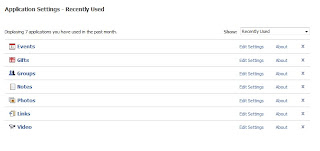
  • Click on the application settings tab in the drop down menu

  • This will bring up the applications setting page


  • Click on the 'Notes' tab

  • This brings up the Notes page. On the right side of the page you will see a clickable link that says 'import a blog'.

  • It looks like this


  • Click on the import a blog link

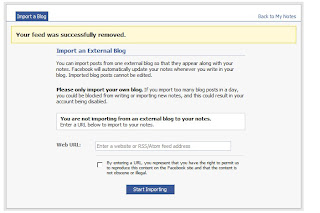
  • This loads the following page


  • Enter the blog feed where it says 'enter URL'
  • Click the radio button to accept the Facebook terms
  • Next click on 'Start import'.
  • Once imported you will be prompted to review the content and then confirm at the bottom of the page

It really as easy as that to add your blog feed to your Facebook profile


Saturday, 7 March 2009

Self Hosted versus Externally Hosted Blogs

So you have decided you want to start your very own blog. Be it for recreational or business purposes, the decision has been made.

But there are so many variables and so many possibilities that just deciding on the one, supposedly simple thing opens a whole basket of questions

In the next few posts we will discuss a few of the recurring questions that newbie bloggers have asked me

Today the question is self hosted or externally hosted blog. Which is best ?

The answer to this depends on what you want to do with your blog. Now as this is an Internet marketing blog, I will target my answer at people who are into marketing online.

Before we get into the discussion we will go over the pros and cons of each type

Self hosted blogs.

These are blogs that you host with your own registered domain name on a hosting server that you have paid for.


Pros of self hosted blogs

  • Control. What you do with your blog is totally under your control. The limits to what you can do with your self hosted blog are dictated by the limits of your technical ability or that of the blog designer you employ. Limitations with regards to templates, design, bandwidth which could be an issue with externally hosted blogs are eradicated by self hosting

  • Domain name. Quite important for some, especially businesss blogs. Some would argue that it is easier to brand your own domain name than a dot blogspot or domain name. Also may have a more professional feel to have your own domain name


Cons of self hosted blogs

  • Money. You need to pay to register the domain name and for the hosting account

  • Set Up. Although you could get a free blogging platform and use this for your self hosted blog e.g the wordpress platform, setting your blog up is more technically difficulted thann the externally hosted blogs.

Externally hosted blogs.

These are blogs where you can create an account for your self but which are hosted on someone else's server, usually free, and which is partially controlled by them

Pros of externally hosted blogs

  • Free. Most of the external blog hosts e.g wordpress.org, blogger, typepad, livejournal are free to use. All you need is a valid email address

  • Easy to Set up. The blogging platforms for the externally hosted blogs are usually user friendly and come with a selection of pre-made templates. There is often also a short walk through introduction, making things really easy

  • Easier to run. Running a blog does not only involve putting up blog posts. There are also other factors like permalinks for each post, automatic pinging, comment forms, comment moderation, generation of RSS feeds. All these are done automatically with the external blogging platforms like wordpress and blogger

  • Leg Up. The externally hosted blogging platforms like blogger already have a wide network of blogs with reputation. By hosting your blog on this network, you blog gets a little leg up with regards to rapid indexing and getting some traffic


Cons of externally hosted blogs

  • Loss of content. Because these blogs are hosted on someone else's servers, they can and occasionally do delete blogs at little notice. Can be a problem because even if your account is re-instated the content is often deleted permanently

  • Unwieldy templates. The selection of templates for these platforms are rather limited and restrict what you can do with them when it comes to page lay out and add ons. If you are savvy with HTML, you can sometimes get around this but for most newbie bloggers, the option is to try and get the template that most closely fits your requirements

  • Domain name. The domain name of the free hosted blogging platforms is only partially within your control. They almost always have URLs that give them away as free hosted blogs. for example the blogger blogs tend to have .blogspot in the domain name


So how does all this apply to an Internet marketer. Again it really depends on what you want to achieve with the blog

Get Backlinks. If you have a primary money making site and all you are trying to do is get backlinks from the blog to your site, then I would suggest a free hosted blog as the ideal option. The advantages are

  • Free. You really do not want to spend money getting backlinks. Especially if you can get them for free
  • IP address. You want the links pointing back to your pages to be from a different IP address than the site you are trying to boost in the search engines. With a blogger or other externally hosted blogging platform, you can be sure that the IP will be different from the server your home site is hosted on
  • Replicate. Because they are free, you can build several different blogs on the different free blogging platforms all with links pointing back to your money making site. This means a bunch of links from different IPs all free, all with relevant content [because you have written the content] pointing back to your website.

Your main money making page

If you intend to make the blog your main online presence then I would recommend a self hosted blog. For these reasons

  • Domain name. You want a domain name that is unique and short and hopefully brandable. .blogspot is just not brandable except maybe for blogger and Google. But you want to have your own stamp on your main business page so a self hosted blog with your own brandable domain name is the way to go
  • Control. You really cannot afford for your business blog to disappear overnight. Just is not good for business. Self hosting your own blog ensures that your blog will be up at least 96 to 99% of the time [depending on which hosting service you are with]
  • Versatility. With self hosting, the variety if things you can easily do with your blogs is vastly increased. Opt in forms, scripts, databases, videos are just a few
  • Bandwidth. With free hosted blogs there is a limit to the bandwidth you are allocated. But if your blog becomes successful with a ton of visitors coming everyday, videos to watch and ebooks to download, your bandwidth will soon be used up. With self hosted blogs you can buy more bandwidth as the amount of traffic and usage of your blog increases.

Whatever option you decide on there are free video tutorials on setting up your blog at how to build a blog

Till next time

Friday, 6 March 2009

Taking Your Blog To Super Blog Status

So many people start blogging with the dream of getting thousands of daily visitors to their blog and making a ton of money.

But the majority fail.

So is it possible to take a blog to super blog status as an individual one man band?

Now this blog, Niche Traffic Sale is nowhere near super blogdom.

But I asked myself could I reach these lofty heights if I wanted to?

And after a shed load of research and analysis the answer is a definite yes.

And this is the result of my research

Characteristics of blogs that have attained super blogdom

Branding
The blogs are all branded. Be it shoemoney, uberaffiliate, problogger, huffington post or matt cutts these blogs have branded there name.

For some reason, probably because of the emphasis on SEO we tend to name our blogs based
on the keywords we are going after. Take this blog for example.

But shoemoney? I suppose it has money in the name. But the point is short, easy to remember names and they spend time branding these names.


Posting
Majority of the really successful blogs post everyday.
Some post several times a day.

And not just any old stocking filler post.

They post articles that are informative, unique, useful and authoritative. Some refer to these as 'Pillar posts'
Some of us write pillar posts some of the time. But you will find that in the authority blogs, ALL their posts are pillar posts . Each post is thoroughly researched with tons of information and nothing left out

Niche.
I have not come across a super blog that was not niche specific. Huffington post is politics, shoe money is online marketing.

Name the super blog and you are looking at a specific niche.

So what should you be doing on your blogs. Perhaps staying niche focused is a good place to start


Personality.
I was reading an article on one of these blogs and I thought 'That's odd! It doesn't have the usual feel to it'
I looked at the top of the post and read 'guest post' 'Aha, that
explains it' I thought.

You see each of blogs that have achieved great status have personality. There is a certain manner of speaking, a way of expressing their views. You could see a post from these blogs on any other site and be almost certain, this is a shoe money post or uberaffiliate entry.

You blog needs to have a personality of it's own. Regular readers should get a sense of familiarity when reading a new post on your blog. Relating to your readers is like relating to your friends. You don't change your personality with every new encounter with a friend so why should your blog?


Focus.
The focus mainly appears to be researching and putting out useful information on the niche. They give you the impression they are passionate about their topic and aim to share as much information about their chosen subject as possible.

These blogs do not post pitch after pitch after pitch. Yes they monetize their blogs and certainly they seem to make a lot of money from these blogs. But they realize that the best way to get people to trust your recommendations is to first get them to trust you.


Comments.
All the super blogs I visited have a comments box and have tons of comments per post. I suppose the ability of a visitor to air their own opinion ads to the perceived value of a blog but it seems to go beyond that.


Opt in box.
The majority have an opt in form somewhere above the fold of the page with a really nice incentive that is usually created by them.

None of this PLR ebooks that you can find on a dozen other blogs.

But informative ebooks or videos that are unique to that particular blog


Social Bookmarking.
We know that social bookmarking can help generate traffic to our blogs and we sometimes bookmark some of our posts.

But ALL of the super blogs have bookmarking icons on there blogs. The popular bookmarking icons are digg, sphinn, stumble upon and technorati.


A ginormous network.
These guys are EVERYWHERE.
Be it article directories, dmoz, digg, you tube, craigslist. Name it, they've been there and done that


So is it possible to take any blog to super blog status?
YES

The question is have you got the time and dedication it takes to do this?

I don't know about you but for me, well I only do this for the fun of it
Till next Time

Sunday, 22 February 2009

Are Blog Carnivals Any Use

Blog carnivals are not new to most of us online marketers but for the newbie, a blog carnival is an article referencing blog posts as sources of information on a particular topic. It is a major blog event.

The carnival host decides on a topic to host a carnival on. Submissions are invited from the public. Webmasters who have blog posts on the topic submit their posts to the carnival host. He then reviews all the submissions and picks a handful that are considered high quality. The host then posts an article with citations from the accepted posts.

A carnival in any niche reflects the pillar blog posts on that niche, or at least that's the idea

So say there is a blog carnival on Niche marketing. Blog owners who have posts on niche marketing can submit there blog posts to the carnival for consideration for inclusion in the carnival

When the blog carnival is published it usually contains a little introduction followed by snippets of the accepted posts with links to the full post at the authors blog

So what does this mean. In a word, backlinks

But are blog carnivals worth investing in to help promote your blog?

Again, in a word, yes. Blog carnivals are very popular and tend to get a ton of traffic when published. Getting one of your blog posts cited in a carnival is like putting your link right under the noses of your targeted visitors.

If your post is decent, a single inclusion could take you from average blogger to super blogger status.

The down side is competition. Getting a blog post accepted in a blog carnival is similar to getting your site into dmoz.

Writing pillar posts that are well thought out with excellent information is a must but unfortunately does not guarantee inclusion

To find out when next a carnival in your niche is scheduled for go to http://blogcarnival.com/bc/

Friday, 9 January 2009

Livejournal Job Cuts?

Wow.
I could not believe it when I heard the news
Live Journal is a major blogging platform and I am sure that some followers of Niche Traffic have live journal blogs of their own.

I must say that I am surprised at the news of the job cuts. As always the usual 'restructuring' phrase is given but one wonders if the credit crunch and global recession is not a contributing factor.

Hmmm and what is that about moving to Moscow?

Difficult times ahead for anyone with only one source of income, the job

Till next time

Monday, 8 December 2008

Top 10 Blog Traffiic Tips. Guest Post By Yaro Starak

In every bloggers life comes a special day - the day they first launch a new blog. Now unless you went out and purchased someone else's blog chances are your blog launched with only one very loyal reader - you. Maybe a few days later you received a few hits when you told your sister, father, girlfriend and best friend about your new blog but that's about as far you went when it comes to finding readers.


Here are the top 10 techniques new bloggers can use to find readers. These are tips specifically for new bloggers, those people who have next-to-no audience at the moment and want to get the ball rolling.


It helps if you work on this list from top to bottom as each technique builds on the previous step to help you create momentum. Eventually once you establish enough momentum you gain what is called "traction", which is a large enough audience base (about 500 readers a day is good) that you no longer have to work too hard on finding new readers. Instead your current loyal readers do the work for you through word of mouth.


Top 10 Tips


10. Write at least five major "pillar" articles. A pillar article is a tutorial style article aimed to teach your audience something. Generally they are longer than 500 words and have lots of very practical tips or advice. This article you are currently reading could be considered a pillar article since it is very practical and a good "how-to" lesson. This style of article has long term appeal, stays current (it isn’t news or time dependent) and offers real value and insight. The more pillars you have on your blog the better.


9. Write one new blog post per day minimum. Not every post has to be a pillar, but you should work on getting those five pillars done at the same time as you keep your blog fresh with a daily news or short article style post. The important thing here is to demonstrate to first time visitors that your blog is updated all the time so they feel that if they come back tomorrow they will likely find something new. This causes them to bookmark your site or subscribe to your blog feed.


You don't have to produce one post per day all the time but it is important you do when your blog is brand new. Once you get traction you still need to keep the fresh content coming but your loyal audience will be more forgiving if you slow down to a few per week instead. The first few months are critical so the more content you can produce at this time the better.


8. Use a proper domain name. If you are serious about blogging be serious about what you call your blog. In order for people to easily spread the word about your blog you need a easily rememberable domain name. People often talk about blogs they like when they are speaking to friends in the real world (that's the offline world, you remember that place right?) so you need to make it easy for them to spread the word and pass on your URL. Try and get a .com if you can and focus on small easy to remember domains rather than worry about having the correct keywords (of course if you can get great keywords and easy to remember then you’ve done a good job!).


7. Start commenting on other blogs. Once you have your pillar articles and your daily fresh smaller articles your blog is ready to be exposed to the world. One of the best ways to find the right type of reader for your blog is to comment on other people’s blogs. You should aim to comment on blogs focused on a similar niche topic to yours since the readers there will be more likely to be interested in your blog.


Most blog commenting systems allow you to have your name/title linked to your blog when you leave a comment. This is how people find your blog. If you are a prolific commentor and always have something valuable to say then people will be interested to read more of your work and hence click through to visit your blog.


6. Trackback and link to other blogs in your blog posts. A trackback is sort of like a blog conversation. When you write a new article to your blog and it links or references another blogger's article you can do a trackback to their entry. What this does is leave a truncated summary of your blog post on their blog entry - it's sort of like your blog telling someone else’s blog that you wrote an article mentioning them. Trackbacks often appear like comments.


This is a good technique because like leaving comments a trackback leaves a link from another blog back to yours for readers to follow, but it also does something very important - it gets the attention of another blogger. The other blogger will likely come and read your post eager to see what you wrote about them. They may then become a loyal reader of yours or at least monitor you and if you are lucky some time down the road they may do a post linking to your blog bringing in more new readers.


5. Encourage comments on your own blog. One of the most powerful ways to convince someone to become a loyal reader is to show there are other loyal readers already following your work. If they see people commenting on your blog then they infer that your content must be good since you have readers so they should stick around and see what all the fuss is about. To encourage comments you can simply pose a question in a blog post. Be sure to always respond to comments as well so you can keep the conversation going.


4. Submit your latest pillar article to a blog carnival. A blog carnival is a post in a blog that summarizes a collection of articles from many different blogs on a specific topic. The idea is to collect some of the best content on a topic in a given week. Often many other blogs link back to a carnival host and as such the people that have articles featured in the carnival often enjoy a spike in new readers.


To find the right blog carnival for your blog, do a search at blogcarnival.com.


3. Submit your blog to blogtopsites.com. To be honest this tip is not going to bring in a flood of new readers but it's so easy to do and only takes five minutes so it's worth the effort. Go to Blog Top Sites, find the appropriate category for your blog and submit it. You have to copy and paste a couple of lines of code on to your blog so you can rank and then sit back and watch the traffic come in. You will probably only get 1-10 incoming readers per day with this technique but over time it can build up as you climb the rankings. It all helps!


2. Submit your articles to EzineArticles.com. This is another tip that doesn’t bring in hundreds of new visitors immediately (although it can if you keep doing it) but it's worthwhile because you simply leverage what you already have - your pillar articles. Once a week or so take one of your pillar articles and submit it to Ezine Articles. Your article then becomes available to other people who can republish your article on their website or in their newsletter.


How you benefit is through what is called your "Resource Box". You create your own resource box which is like a signature file where you include one to two sentences and link back to your website (or blog in this case). Anyone who publishes your article has to include your resource box so you get incoming links. If someone with a large newsletter publishes your article you can get a lot of new readers at once.


1. Write more pillar articles. Everything you do above will help you to find blog readers however all of the techniques I’ve listed only work when you have strong pillars in place. Without them if you do everything above you may bring in readers but they won’t stay or bother to come back. Aim for one solid pillar article per week and by the end of the year you will have a database of over 50 fantastic feature articles that will work hard for you to bring in more and more readers.


I hope you enjoyed my list of traffic tips. Everything listed above are techniques I’ve put into place myself for my blogs and have worked for me, however it's certainly not a comprehensive list. There are many more things you can do. Finding readers is all about testing to see what works best for you and your audience and I have no doubt if you put your mind to it you will find a balance that works for you.


This article was by Yaro Starak, a professional blogger and my blog mentor. He is the leader of the Blog Mastermind mentoring program designed to teach bloggers how to earn a full time income blogging part time.


To get more information about Blog Mastermind click this link:

www.BlogMastermind.com


Saturday, 8 November 2008

On Page SEO For Your Blogger Blog

So I have managed to get a few of the posts on this and other blogger blogs to rank well with the search engines for a bunch of keywords

Everyone in affiliate marketing goes on about how great Wordpress is and how all those plug ins allow you to enhance your optimization efforts. And there is no disputing that this is true

But blogger posts can also be easily optimized and you have the advantage of quick indexing with blogger

Here are a few on page optimization tips for your blogger blog

On page SEO tip 1: Domain name. Before you choose the domain name of your blogger blog, do some keyword research and determine which keyword is most relevant to your blog.

Once you have identified the keyword, use it as the first word of your blogspot domain name
Remember, the earlier in your URL the keyword appears, the better for your SEO

On page SEO tip 2: Post title. When setting up your blog, you should have selected yes for the option to allocate each post it's own unique URL.

If you have done this each post's URL is your blogger domain name + the post title.

You should, where possible, include the keyword you are targeting in each post, in the title of your post

On page SEO tip 3: Template. We know that the google bot reads the webpage from LEFT to RIGHT and TOP to BOTTOM.

So why would you want to choose a template that has the about me and other widgets on the left side of the page? They have little or no SEO value.

It makes better sense to use a template that has the blog post to the left of the page and all the other widgets, ads etc on the right side of the page

Till next time